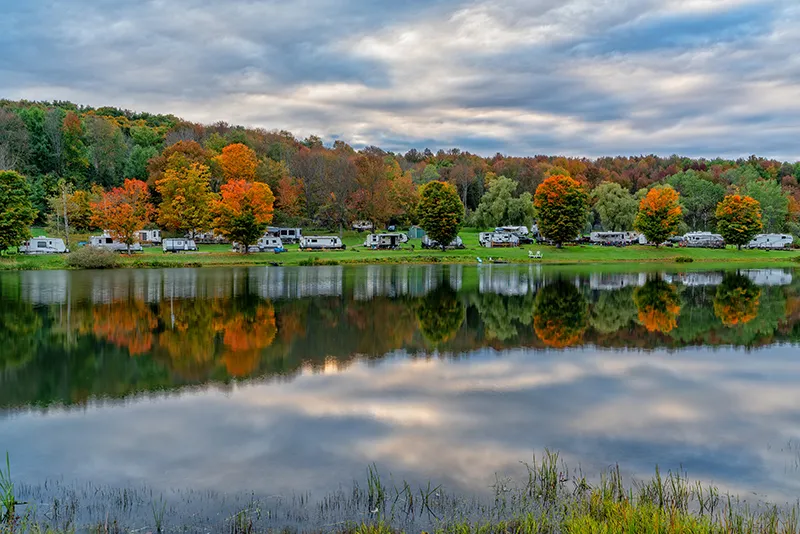
The Southeast is one of America’s most popular regions for RV travel and outdoor recreation. From the Smoky Mountains of Tennessee to the Blue Ridge Mountains of North Carolina and Georgia, to the white-sand beaches of Florida and Alabama, RV parks and campgrounds in this region welcome millions of guests every year. With high guest activity comes significant risk, and choosing the right insurance is generally an important part of protecting your investment.
Whether your park is in Tennessee, Georgia, Alabama, the Carolinas, Florida, Mississippi, or Louisiana, this guide outlines considerations for selecting insurance for your property, your business, and your guests.
Understanding the Risks Southeast RV Parks Face
RV parks in the Southeast face a combination of weather and environmental challenges that differ significantly from parks in other regions. Choosing the right insurance starts with understanding what you are protecting against.
Hurricanes and tropical systems threaten parks across Florida, the Gulf Coast, Georgia, and the Carolinas every year. Tennessee, Alabama, Mississippi, and Georgia sit in active tornado corridors. Severe thunderstorms and high winds can strike with little warning across the entire region. Low-lying coastal and river areas face flooding and storm surge that can damage a property significantly in hours. The Southeast’s heat and humidity drive heavy electrical demand on hookups, pumps, and equipment, and dense tree cover creates ongoing risk from falling limbs, debris, and wildfire.
When choosing insurance, selecting a provider familiar with these regional exposures and outdoor hospitality businesses in the Southeast is generally a key consideration.
What Insurance Does an RV Park Need in the Southeast?
Not all insurance policies are the same. RV parks and campgrounds often benefit from custom coverage that accounts for outdoor operations, transient guests, high-value utility infrastructure, and the Southeast’s unique weather risks. Coverages Southeast campground owners commonly consider include, but are not limited to, the following.
General Liability Insurance
General liability is generally designed to respond to bodily injury and property damage claims occurring at your RV park and campground premises for which you are alleged to be negligent. Liability exposures often addressed by the policy include, but are not limited to, water exposures, LP gas sales, general store operations, pool and recreation areas, showers and restrooms, laundry facilities, restaurant and bar areas, and special events. Examples of liability claims include trip and falls, dog bites, and pool incidents.
Some insurance companies also offer trailer spotting coverage, which is generally designed to address damage to a guest’s vehicle during the act of moving or placement by you or your staff.
Reviewing the exclusions in the back section of your General Liability policy is generally important. Not all RV Parks and Campgrounds are the same, and not every policy covers the same things. Many exclusions list specific activities or exposures that are not included, and you may also find limitations on liability coverage for certain activities. A specialized outdoor insurance agency like John Bailey Company can help review these provisions and discuss coverage options with insurance companies on your behalf.
Real-world example: Consider a scenario where a guest slips on a wet pool deck after a summer thunderstorm and fractures their wrist. Without general liability coverage in place, the park could face significant exposure for medical costs, legal fees, and any settlement. Actual outcomes depend on the specifics of the incident, applicable policy terms, and other factors.
Commercial Property Insurance
Commercial property insurance is generally designed to help protect the physical structures and contents of your RV park. Buildings this insurance often addresses include, but are not limited to, cabins, bathhouses, restrooms, offices, storage buildings, laundry rooms, camp stores, pavilions, signage, and fencing. Luxury glamping tents and domes may also have available coverage terms depending on your carrier.
In the Southeast, your property policy may have limitations or exclusions for wind and hail coverage. Flood coverage is typically not included on most property policies:
- Wind, hail, and hurricane endorsements are more common in the Southeast and often come with separate named-storm deductibles calculated as a percentage of insured property value rather than a flat dollar amount.
- Flood insurance is generally excluded from standard commercial property policies. If your park is in or near a FEMA-designated flood zone, near a river or creek, or in a low-lying coastal area, separate flood coverage is often a key consideration. Even parks outside designated flood zones can experience flash flooding from severe Southeast thunderstorms.
When insuring your buildings, understanding the difference between Replacement Cost, Actual Cash Value, and how Coinsurance works is generally important. Insuring a building for less than its full replacement cost may trigger coinsurance penalties that reduce claim payouts.
Inland Marine Insurance
Inland marine insurance is generally designed to address property and equipment that is outdoors or in the open, which standard commercial property policies often exclude or limit. For RV parks, this is often a key consideration because so much of the infrastructure sits outside. Examples include, but are not limited to, above-ground utility hookups (water, sewer, electrical pedestals), picnic tables, playground equipment, tractors, golf carts, and other maintenance equipment.
Business Interruption Insurance
Business interruption coverage is often a key consideration in the Southeast, where storms frequently disrupt operations. This coverage is generally designed to help replace lost income, cover payroll, and pay ongoing expenses during a closure caused by a covered loss to a covered building. For seasonal parks, this coverage can be particularly important when factoring in storm-related interruptions.
Real-world example: Consider a scenario where a hurricane forces a coastal Georgia campground to close for several weeks during peak summer season after wind damage to covered buildings. Business interruption insurance is generally designed to help address lost revenue, employee wages, and fixed expenses during a covered closure, subject to policy terms, conditions, and exclusions. Actual coverage in any specific incident depends on the policy form and the nature of the loss.
Equipment Breakdown Insurance
RV parks rely on specialized equipment that can be expensive to repair or replace. Equipment breakdown coverage is often considered for parks operating pool pumps and filtration systems, water pumps and well systems, electrical pedestals and distribution panels, HVAC systems in offices and common buildings, generators, and outdoor recreation equipment. Availability and terms vary by carrier.
Environmental Liability Insurance
Environmental liability is often a key consideration for parks with septic systems, lakes or ponds, rivers or creek access, wetlands or coastal frontage, and fuel storage or propane stations. Septic failures, fuel leaks, and other environmental incidents can create cleanup costs and regulatory exposure that many standard policies exclude or limit.
Liquor Liability Insurance
Often important if you sell beer, wine, or spirits at your camp store, bar, or restaurant. In many states, businesses that provide alcohol may be held liable for incidents involving intoxicated guests.
Workers’ Compensation Insurance
Workers’ compensation is required in most Southeastern states for businesses meeting certain employee thresholds. Specific requirements vary by state and industry — consult your state’s labor or workers’ compensation authority for requirements that apply to your operation. This coverage generally helps address medical costs and lost wages for work-related injuries to maintenance crew, front desk staff, lifeguards, housekeepers, and seasonal workers.
Commercial Auto Insurance
Generally needed if your park operates maintenance vehicles, courtesy shuttles, branded golf carts, or any vehicles used for business purposes. Hired and Non-Owned Auto coverage is also often available and may sometimes be found as an endorsement to the general liability coverage. This coverage part generally provides liability coverage for rental vehicles or non-owned autos used by the business.
Umbrella Liability Insurance
Provides additional liability limits above primary policy limits. Often a key consideration for parks near water, in heavy tourist areas, or with high guest volumes.
Employer Practices Liability Insurance (EPLI)
Generally designed to address employment-related claims, including allegations of wrongful termination, discrimination, or harassment by seasonal or full-time staff. This coverage is often a growing consideration as labor regulations evolve and seasonal employment practices face greater scrutiny.
Cyber Liability Insurance
If your park takes online reservations, processes credit card payments, or stores guest data electronically, cyber liability insurance is generally designed to address exposures involving data breaches, phishing attacks, and ransomware incidents.
Emerging Risks for Southeast Campgrounds
The campground industry is evolving rapidly, and insurance considerations are evolving with it. Several trends are creating new risk exposures that many park owners may not yet have addressed:
EV charging stations are becoming a guest expectation at modern RV parks. These can introduce electrical fire risk, equipment liability, and potential code compliance considerations that current policies may not address.
Glamping operations are growing across the Southeast as parks add luxury tents, domes, treehouses, and yurts. These structures may require different coverage terms than traditional cabins or RV sites. If your park offers glamping, confirming that these structures are specifically listed on your property policy is generally important. (See our Glamping Insurance page for more details.)
Larger group events such as weddings, corporate retreats, and music festivals at campgrounds are becoming more common. Each event can introduce liability exposures involving participant injuries, property damage, alcohol service, and event cancellation that base policies may not address without an event liability endorsement.
Full-time RV residents are an increasing segment of the market. Long-term stays can create different liability and property considerations compared to short-term transient guests, and some policies treat them differently.
Choose an Insurance Partner Who Knows the Southeast Market
Not every insurance carrier understands the complexities of operating an RV park in the Southeast. At John Bailey Company, we have access to multiple specialty carriers offering RV park and campground insurance, and we regularly insure parks across the region. We work with operators on considerations including wind and hurricane zoning, flood-zone mapping and FEMA compliance, state-specific liability requirements, seasonal versus year-round operation considerations, coastal underwriting restrictions, tree-related claim trends, and regional wildlife liability.
Experience matters. Regional experience matters even more.
Ready to get started? Schedule a free consultation or call us at (865) 412-4891.
How to Compare RV Park Insurance Quotes: A Southeast Checklist
When reviewing quotes, looking beyond the premium is generally helpful. A slightly higher premium may provide broader protection, especially in storm-prone states. Here are questions to consider asking each insurer:
- Are wind and hurricane deductibles clearly defined? Are they flat-dollar or percentage-based?
- Does the policy include off-season vacancy provisions?
- Is equipment breakdown included or optional?
- Are cabins and outbuildings insured for Replacement Cost, Actual Cash Value, or subject to Coinsurance?
- Does the policy address tree damage and debris removal (a common and costly claim in the Southeast)?
- Is flood coverage appropriate based on your elevation and proximity to water?
- Are guest-caused damages covered?
- Are dog-related incidents covered, or is there an animal exclusion?
- Are there exclusions for specific activities like jumping pillows, boat rentals (canoes, kayaks, paddleboats), ATVs, golf carts, or water features?
- Does the policy address glamping structures (tents, domes, yurts) if you offer them?
What Underwriters Want to See: How to Get the Best Quote
Insurance companies generally reward responsible operators with more competitive pricing and broader coverage options. At John Bailey Company, we use risk management documentation to help tell the story of how you operate your business. Our goal is to put ourselves in the shoes of the underwriter and help demonstrate that your park is actively managing risk. Common considerations include:
Liability Waivers
Many RV parks use guest liability waivers as part of their risk management program. Waiver enforceability varies by state and circumstance, and waiver language should be developed in consultation with a qualified attorney. Underwriters often view documented waiver programs favorably, and providing a copy of your waiver at the time of application can help demonstrate active risk management.
Owner Biography and Experience
Underwriters often want to know who is running the operation. A written biography of the owner can be a useful tool, especially for new businesses. It can cover your history of owning or working in the RV park and campground industry, relevant experience, and operational philosophy. If you are new to the business, including information about any business consultants or industry advisors you are working with may help. A strong bio can help signal to the underwriter that this is a stable, experienced operation.
On-Site Management
Having a manager who lives on premises is often viewed as a positive factor in underwriting. It can demonstrate ongoing oversight and faster response to incidents, maintenance issues, and guest concerns.
Claims Narrative
If you have past claims, providing a detailed explanation of how each claim occurred and what risk management steps were taken afterward to help prevent recurrence is often valuable. Underwriters generally want to see that you learned from the experience and made changes.
Formal Maintenance Plan
A written maintenance plan is often one of the most effective tools for helping prevent claims, and many insurance companies will require one. This typically documents scheduled inspections, repair protocols, and preventive maintenance for structures, utilities, and amenities.
Water Safety and Pool Compliance
Parks with water features should consider proper signage, including warnings about swimming dangers, pool depth markers, clearly posted rules, and “swim at your own risk” notices. Swimming pools and spas may be subject to applicable federal and state pool safety standards, including the Virginia Graeme Baker Pool and Spa Safety Act, which addresses standards for drain covers, suction outlets, and entrapment prevention. Specific applicability and compliance requirements vary based on the type and use of pool, and operators should consult with a qualified attorney or pool safety professional to confirm what applies to their facility.
Building Condition and Updates
Older buildings with outdated roofs, electrical systems, plumbing, or structural issues can be significantly harder to insure. In the current insurance market, properly maintained and updated buildings generally generate more competitive quotes, while buildings that have not been updated may come with reduced coverages, higher deductibles, or placement difficulty. Documenting all updates and maintenance work helps underwriters see the current condition of your property.
Real-world example: In some cases, providing underwriters with comprehensive documentation — including a detailed maintenance plan, multi-year building update history, and photos documenting roof replacements, electrical panel upgrades, and bathhouse renovations — has helped operators secure more competitive quoting outcomes. Specific premium impact varies by carrier, market conditions, and the individual risk profile.
Review Your Coverage Every Year
The Southeast campground market evolves rapidly. Increased tourist traffic, higher construction and labor costs, expanded amenities (EV chargers, cabins, pools, glamping units), and changing storm frequency and intensity can all affect insurance considerations. Reviewing your coverage annually can help confirm that all new structures are listed on your policy, limits reflect current rebuilding costs, new activities or amenities are properly disclosed, and risk management improvements are documented and shared with your carrier.
Annual reviews can help identify potential coverage gaps before they become an issue after a major claim.
Why Work With John Bailey Company
At John Bailey Company, we actively shop multiple national and regional carriers that specialize in outdoor hospitality insurance. As independent agents, we work for you, not the carrier. That means competitive quoting across multiple specialty carriers, broader coverage options that can be customized to your specific operation, Southeast-specific guidance from a team familiar with regional risks, and dedicated claims advocacy when you need it most.
Our RV Park and Campground Insurance program has been built on the same approach we take with all of our specialty clients: we think like an underwriter so we can present your business in the best possible light. It’s an approach that sets our specialty practice apart.
Frequently Asked Questions
Does standard RV park insurance cover hurricane damage?
Not automatically. Wind and hurricane damage often require specific endorsements that are typically excluded from base commercial property policies. In the Southeast, these endorsements are often a key consideration and may come with separate named-storm deductibles that are calculated as a percentage of the insured property value rather than a flat dollar amount. Confirming how these deductibles are defined before storm season is generally important.
Do I need flood insurance for my campground?
Flood damage is generally excluded from standard commercial property policies. If your RV park is in or near a FEMA-designated flood zone, near a river or creek, or in a low-lying coastal area, separate flood insurance is often a key consideration. Even parks outside designated flood zones can experience flash flooding from severe Southeast thunderstorms.
What is inland marine insurance and why might I need it?
Inland marine insurance is generally designed to address property and equipment that is outdoors or in the open. Standard commercial property policies often exclude or limit coverage for items not inside a building. For RV parks, this is often a key consideration because much of the infrastructure — including utility hookups, electrical pedestals, playground equipment, picnic tables, and maintenance vehicles — sits outside year-round.
What can I do to support more competitive insurance quoting?
Strong risk management practices generally support more competitive quoting outcomes. Common practices that underwriters view favorably include maintaining a formal maintenance plan, using documented liability waiver programs (developed with qualified counsel), keeping buildings and infrastructure updated, having on-site management, and confirming that pool and water features meet applicable safety standards (including any applicable federal and state requirements such as those addressed by the Virginia Graeme Baker Pool and Spa Safety Act, where applicable). Documenting all of this thoroughly helps tell the underwriter the story of a responsible operation. Specific premium impact varies by carrier and market conditions.
Does my policy cover glamping structures?
Not automatically. Luxury tents, domes, treehouses, and yurts may require different coverage terms than traditional cabins or RV sites. These structures generally need to be specifically listed on your property policy. If your park offers glamping, confirming with your carrier that they are addressed by the policy is generally an important step.
Are dog-related incidents covered at my RV park?
Reviewing your policy carefully is generally important. Some general liability policies include an animal exclusion that could leave your park unprotected if a guest’s dog bites another guest or staff member on the property. If your park is pet-friendly, confirming with your carrier whether animal-related incidents are addressed under your liability policy is a key consideration.
Disclaimer
The information in this guide is provided for general educational purposes only and does not constitute insurance, legal, or tax advice or an offer of coverage. All coverage descriptions are general in nature; actual coverage is subject to the terms, conditions, limits, and exclusions of the issued policy. Coverage availability varies by carrier and state. Real-world examples are illustrative only and do not represent guarantees of outcome. Specific regulatory, statutory, and compliance questions — including those related to pool safety, employment law, environmental regulations, and licensing — should be reviewed with a qualified attorney or appropriate professional. Please consult a licensed agent for advice specific to your situation.